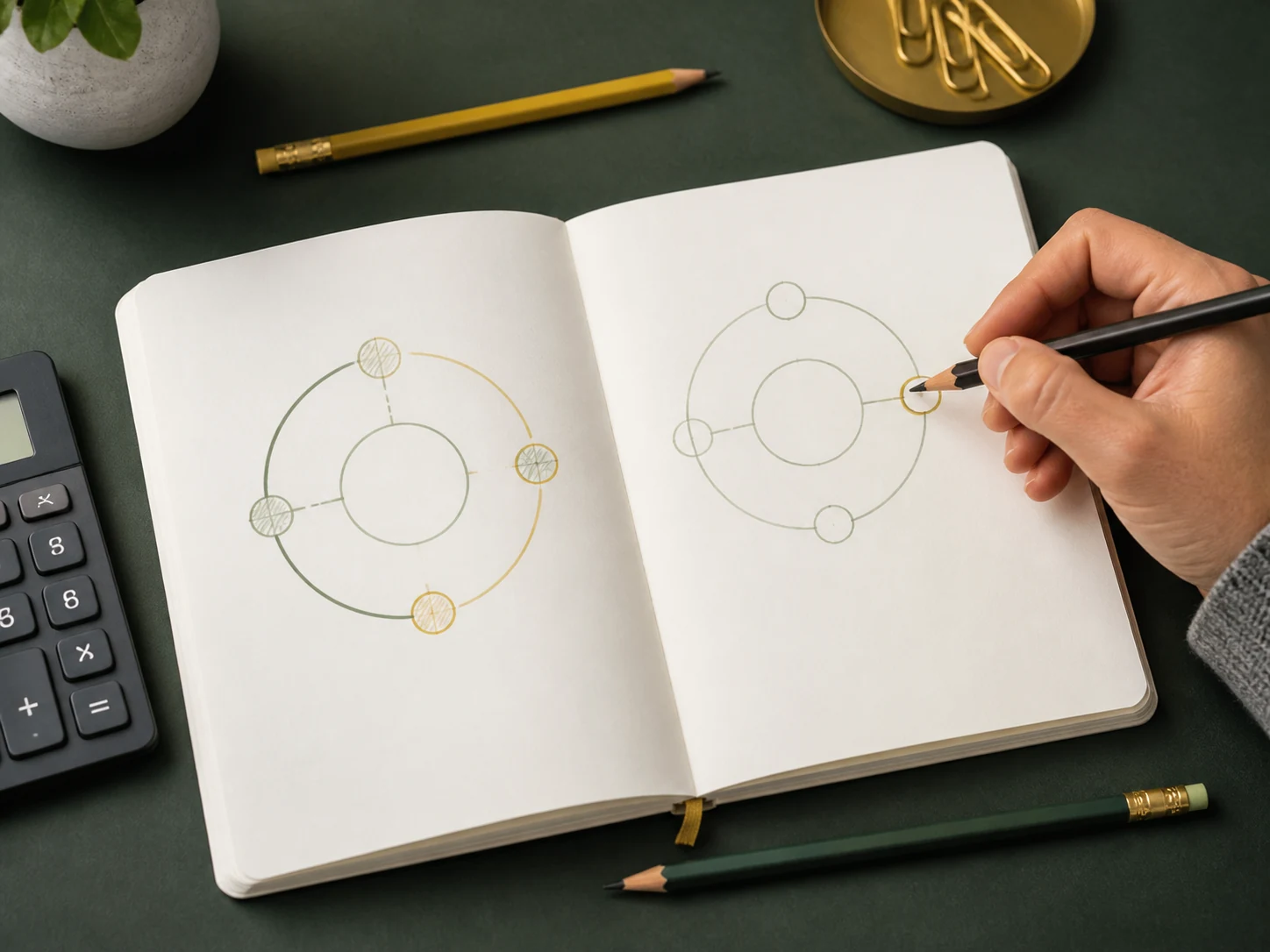
Start with what is already happening
A budget is a plan for money, not a test of discipline. Begin with recent income and recurring spending, then estimate the categories that vary. Use actual statements or records when available rather than relying only on memory.
Give important categories a place
Set aside space for essential costs, irregular expenses, savings goals and personal spending. The right category names are the ones you will recognize and update; a simple system you revisit is more useful than a detailed system you abandon.
Use the plan as information
Compare the plan with what actually happened at the end of the month. Adjusting categories is not failure—it is how the plan becomes more accurate. This is general education, not individualized financial advice.
Editorial note
This initial release uses research-first review and comparison templates while merchant partnerships are not yet active. Product-specific facts should be independently verified before publication.